| Category |
Details |
| 🔧 Skill Level |
Intermediate – This species is a parent of many hybrids, so it's fairly adaptable. It just prefers a little more consistency with watering than a NOID phal. |
| 🌍 Native Region |
The species is native to Indonesia, Australia, and the Philippines, where it grows as an epiphyte (on trees). |
| ⛰️ Elevation Range |
Lowland to mid-elevation forests. |
| 🪴 Plant Size |
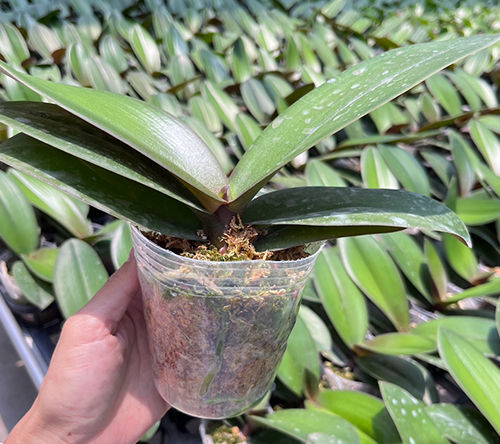
Medium; produces arching leaves and long, graceful flower spikes. |
| 🎍 Terrarium Suitable? |
Possible in a very large, ventilated terrarium, but usually too large. |
| ☀️ Blooming Season |
Winter to spring, often triggered by a slight temperature drop. |
| 🌸 Bloom Traits |
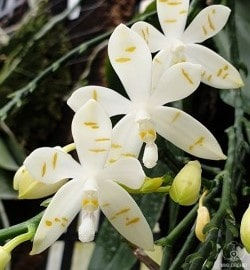
4-8cm flowers; classic white with pink. The 'Surabaya' selection is known for larger flowers, and sibling crosses (× sib) mean you might see slight natural variation. |
| 👃 Fragrance |
The pure species is fragrant; however, fragrance can sometimes be variable in sibling crosses. |
| 🌡️ Temperature |
Year-round: 18-28°C day / 16-22°C night. To induce flowering: Provide a slight temperature drop to 16-18°C at night for a few weeks in autumn. |
| 💧 Watering |
Use wet to dry cycles. Water thoroughly (soak for 30 minutes) when the roots turn silvery and the media is nearly dry. Do not let it stay soggy. Use rainwater or distilled water for best results. |
| ☁️ Humidity |
50-70% is ideal, but it can adapt to lower levels (around 40%) if watered correctly. |
| 💡 Light |
Medium to bright indirect light (1,500-2,500 lux). An east-facing window is perfect. Protect from harsh midday sun. |
| 🌰 Growing Medium |
A standard Phalaenopsis mix (bark, perlite, charcoal) or sphagnum moss, depending on your watering habits. Ensure excellent drainage. |
| 🧪 Fertilisation |
Feed with a balanced orchid fertilizer (e.g., 20-20-20) at 1/4 strength every other watering during active growth (spring and summer). Reduce feeding in winter. |
| ⚠️ Special Notes |
1. The species amabilis is a parent of countless modern hybrids, making it a fascinating "original".
2. It appreciates good air movement to prevent root rot.
3. As a sibling cross, each seedling may have slightly different characteristics, adding a touch of uniqueness to your plant. |
| 🛒 Collector Status |
✨ Uncommon – A sought-after pure species form for collectors who want to grow the "original" Moon Orchid. |